
DM Plant
- Home
- »
- Turnkey Projects
- »
- DM Plant
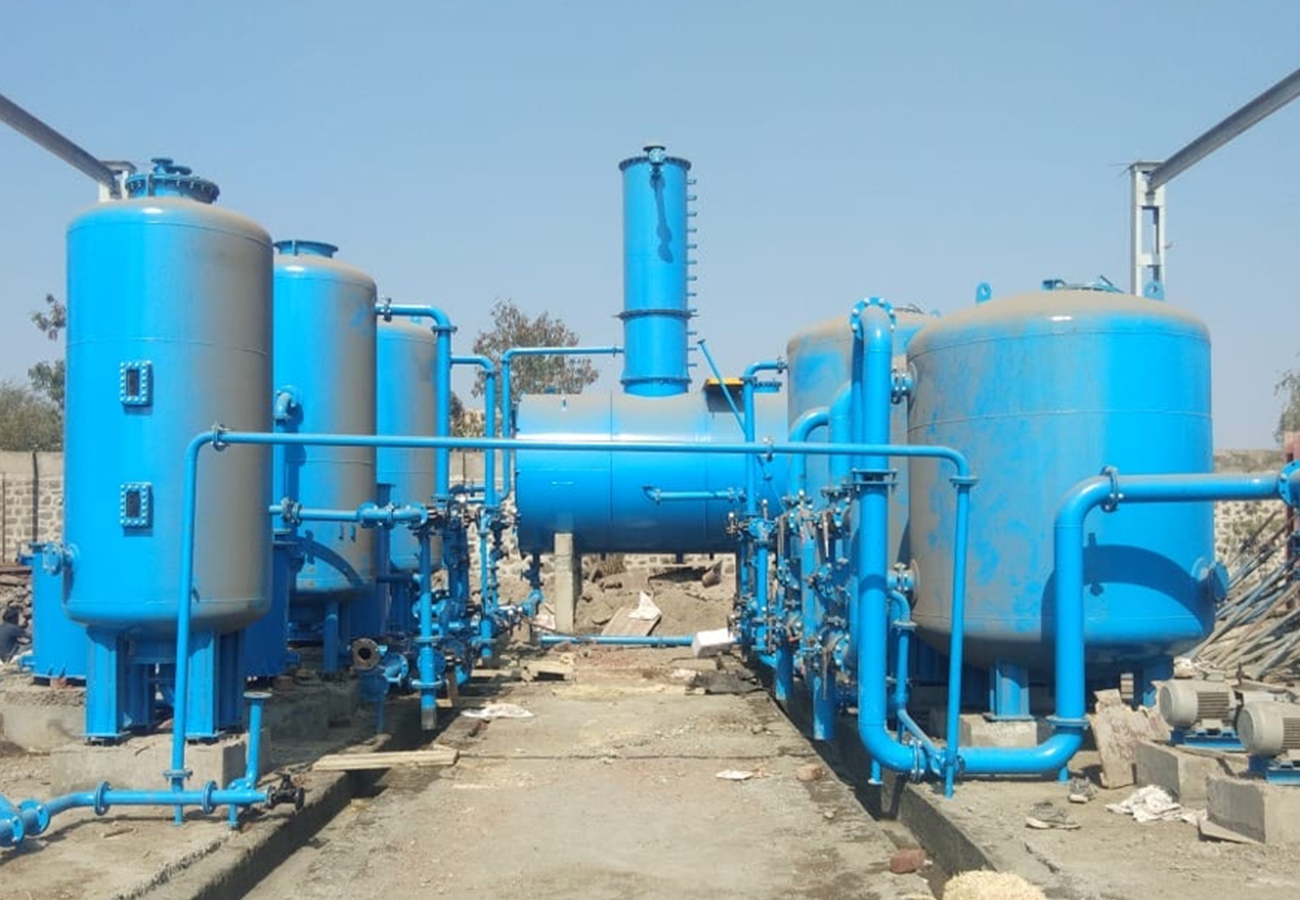
Distington’s DM systems are custom designed to water source and your automation needs to perform reliably with low chemical consumptions, deliver high recovery rates and are energy efficient.
What Is a DM Plant?
Numerous industrial processes need pure water, as even minimal traces of dissolved salts may destroy machinery or compromise the quality of products. A DM Plant (Demineralization Plant) is a water treatment facility that is used to eliminate all the dissolved minerals and salts in the water, producing high-quality demineralized water. Distington Engineers and Consultants is a foremost manufacturer of DM Plant in Indore that offers high-end and quality DM plant solutions to industries, commercial, and utility customers.
The application of demineralized water in boilers, power plants, pharmaceutical, and manufacturing plants is widespread, and the quality of the water has a direct bearing on the performance, safety, and efficiency.
What Is the Process of a DM Plant?
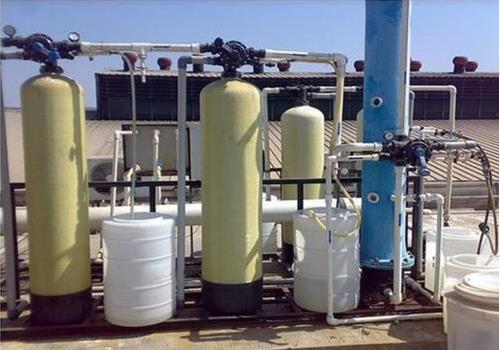
The principle on which a DM plant functions is through ion exchange, where dissolved salts are pulled off by passing water through special columns of resin.
This process normally involves –
- Removal of suspended solids, chlorine, and turbidity by use of sand and carbon filters at the pre-treatment stage.
- Substitution of positively charged ions like calcium, magnesium, and sodium with hydrogen ions in this process is known as cation exchange.
- Anion exchange, in which the negatively charged ions, e.g., chloride, sulfate, and nitrate, are exchanged with the hydroxyl ions.
- The hydroxyl and hydrogen ions then combine to make pure water.
A mixed bed unit is used instead of final polishing in some systems to obtain very low conductivity and high-purity production. This is a multi-stage process that produces uniform demineralized water that is fit to use in the critical industry.
Benefits of DM Plant in Industry
The installation of the DM plant has a number of technical and operational benefits:
- Gives a high level of purity of water, which has very low TDS and conductivity.
- Eliminates boiler and heat exchanger scale formation and corrosion.
- Enhances equipment and piping efficiency and life.
- Improves the quality of products in sensitive manufacturing.
- Minimizes costs of maintenance and downtimes.
- Stipulates that the industrial water quality meets the standards.
These advantages make DM plants inevitable in the current industrial activities.
The installation of the DM plant has a number of technical and operational benefits:
- Gives a high level of purity of water, which has very low TDS and conductivity.
- Eliminates boiler and heat exchanger scale formation and corrosion.
- Enhances equipment and piping efficiency and life.
- Improves the quality of products in sensitive manufacturing.
- Minimizes costs of maintenance and downtimes.
- Stipulates that the industrial water quality meets the standards.
These advantages make DM plants inevitable in the current industrial activities.
Applications of DM Plant
Demineralization plant finds wide uses in various industries, which include:
- Boiler feed water systems and power plants.
- Medical research and pharmaceutical sectors.
- The petrochemical and chemical processing units.
- Manufacturing of food and beverages.
- Electronics and semiconductor businesses.
- Laboratories and research centers.
- High-pressure and cooling towers.
In all these, the high purity of water is key to the performance, safety, and reliability of the process.
Top DM Plant Manufacturer & Supplier in Indore, India
Distington Engineers and Consultants, as a reliable DM Plant Manufacturer and supplier in Indore, has the capability of providing the full turnkey solutions of the DM plant- including the system design and resin selection, fabrication, installation, commissioning, and after-sales services. Their DM plants are designed to be able to cope with different characteristics of the raw water and provide consistent output and long life.
Distington tailors each plant according to the flow rate, inlet water composition, pressure arising, and purity demands in the plant to have optimum performance and economical energy consumption by the system.
Why Choose Distington Engineers & Consultants?
Distington Engineers & Consultants is a company that has a reputation of engineering excellence and reliable service:

Engineered DM plant designs in various industrial applications.

Grade-level ion exchange resins and corrosion-resistant vessels.

High-level automatic regeneration and monitoring control systems

Meeting industrial water and utility water standards.

Quick implementation of projects and professional commissioning.

Good after-sales service and technology.

Low-cost, effective systems in terms of operating and maintenance costs.
Distington, as an established DM Plant Manufacturer, provides a dependable, effective and durable demineralization unit to meet the industrial water treatment requirements that are of critical importance.
The correct selection of DM plant benefits includes quality of water, equipment protection, and enhanced efficiency of the whole process. Collaborate with Distington Engineers and Consultants in the development of superior, dependable, and future-oriented demineralization systems to achieve consistent operations and longevity.
Frequently Asked Questions About DM Plant
A Demineralization (DM) Plant is used to remove dissolved minerals, salts, calcium, magnesium, silica, and other ions from water to produce high-purity demineralized water. DM plants are widely used in power plants, pharmaceutical industries, chemical processing, food and beverage manufacturing, electronics, and boiler feed water applications, where mineral-free water is essential for efficient operations.
The full form of DM Plant is Demineralization Plant. It is a water treatment system that removes dissolved minerals and ionic impurities through an ion exchange process to produce high-quality demineralized water for industrial applications.
A DM Plant removes dissolved ions using ion exchange resins, while a Reverse Osmosis (RO) Plant removes dissolved salts and impurities using a semi-permeable membrane. RO plants are commonly used as a pre-treatment system, whereas DM plants produce ultra-pure water required for industries such as power generation, pharmaceuticals, and electronics.
DM Water stands for Demineralized Water. It is purified water from which dissolved minerals, salts, and ionic impurities have been removed, making it suitable for industrial processes that require high-purity water.
In a power plant, a DM Plant produces high-purity water for boiler feed applications. Demineralized water helps prevent scaling, corrosion, and deposits inside boilers and turbines, improving efficiency, equipment life, and overall plant performance.
The most common chemicals used in a DM Plant are Hydrochloric Acid (HCl) or Sulfuric Acid (H₂SO₄) for regenerating the cation exchange resin, and Sodium Hydroxide (NaOH) for regenerating the anion exchange resin. These chemicals restore the ion exchange capacity of the resins and ensure consistent production of demineralized water.
A DM Plant works on the ion exchange principle. Water passes through cation and anion exchange resins that remove dissolved positively charged ions (cations) and negatively charged ions (anions). The result is high-purity demineralized water with very low mineral content, suitable for industrial use.
A DM Plant is regenerated by treating the cation resin with Hydrochloric Acid (HCl) or Sulfuric Acid (H₂SO₄) and the anion resin with Sodium Hydroxide (NaOH). Regeneration restores the resin's ion exchange capacity, allowing the system to continue producing high-quality demineralized water efficiently.
DM Plants are widely used in power generation, pharmaceuticals, chemicals, food and beverage, electronics, textiles, automotive, and manufacturing industries where high-purity water is required for production processes and equipment protection.
A DM Plant provides high-purity water, prevents scaling and corrosion, improves boiler efficiency, extends equipment life, reduces maintenance costs, and ensures consistent water quality for critical industrial processes.
Let's Connect for Your DM Plant Requirements
Need a Customized DM Plant for Your Industry?
Talk to our engineers for tailored DM Plant solutions designed to meet your wastewater treatment requirements, regulatory standards, and production needs anywhere in India.