
Multi-Effect Evaporator
- Home
- »
- Turnkey Projects
- »
- Multi-Effect Evaporator

Distington Engineers specializes in waste water Evaporation technology. Distington Engineers first entered the Evaporation Technology sector in 2011. With over 15 years of expertise in Waste Water Evaporation technology, we offer a wide range of energy efficient solutions like TVR based MEE, MVR, Non-TVR MEE, ATFD etc.
A. Multi Effect Evaporator (MEE) Schemes:
- Steam Based and Electrically Heated In industries that do not have an existing boiler Distington offers Electrically operated solutions
- TVR and Non-TVR Solutions. We offer both TVR and Non-TVR based options. Non-TVR finds its application in industries that produce low pressure steam of intend to reuse residual steam from allied manufacturing process. Eg: Turbine steam based MEE solutions.
- Single Effect Evaporators vs Multi Effect Evaporators
- Forced Circulation and Falling Film Design available. The selection depends on water concentration and scaling tendencies of waste water
What Is a Multiple Effect Evaporator?
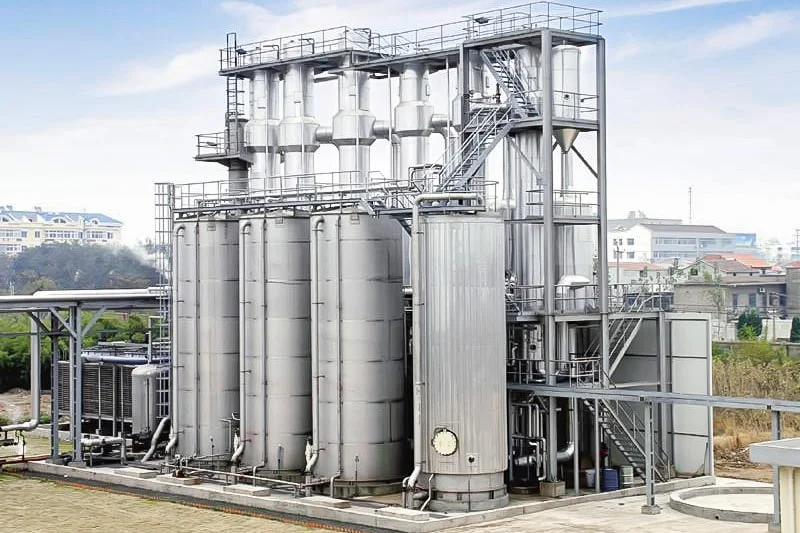
As industries are under pressure to reduce the wastewater released and extract useful resources, Multiple Effect Evaporators (MEE) are becoming a key solution in contemporary effluent management. Multiple Effect Evaporator is a thermal separation system that is being employed to concentrate liquid effluents and condensate clean water by evaporating it efficiently. With the business of a Multi Effect Evaporator Manufacturer in Indore, Distington Engineers and Consultants has been designing and supplying high-performance MEE systems in the applications of Zero Liquid Discharge and minimization of wastewater.
Many effect evaporators have been extensively employed within the industries where large quantities of liquid waste have to be treated in an economical manner without consuming either energy or water.
- Small prefabricated 1:1 evaporation solutions for small industries with low volumes of high TDS effluent
- ATFD Vapor Integrated MEE for very low operating costs Applicable for larger MEE plants, allowing industries to reduce steam costs by 20-30%.
- Centrifuge and Agitated Thin Film Dryer (ATFD) based solutions for final powder by-product
- Fixed Film Activated Sludge Reactor (FFAR)
- Upflow Anaerobic Sludge Blanket
- MVR technology based solutions
Why Choose Us?
-
Strong post sales service:-
1. On site Jet Cleaning Services available
2. O&M and AMC capabilities
3. On stop destination for all spares, repairs,short term replacement supports etc
4.In house fabrication team available
- Wide range of industry experience
- Strong client portfolio
- 15+ years of experience and specialization in waste water evaporation technology
How Does a Multiple Effect Evaporator Work?
There is a Multiple Effect Evaporator which works on the principle of utilizing energy in one effect to heat the next effect and thus enhances thermal efficiency.
In the former effect, the steam is used to heat the feed solution, and some of the liquid evaporates. The resulting vapor is then utilized as the heating media in the second effect where the process of evaporation occurs in the second effect at a lower pressure. This step is repeated in various steps or effects that work at increasingly low temperatures and pressures.
The system is highly concentrated and makes use of latent heat that is reused in multiple effects to cut steam usage and operating costs down to a minimum.
Key features of MEE System
The modern MEE systems are made with high efficiency, durability, and operational reliability. Key features include:
- Multi-stage evaporation to achieve a higher energy use.
- Intense heat exchanger design to enhance good heat transfer.
- Temperature, pressure, and flow automatic control.
- Against aggressive effluents Corrosion-resistant construction to work with aggressive effluents.
- Small size with easy access to maintenance.
- Ability to be combined with crystallizers and condensate polishing units.
Distington, being an old Multiple Effect Evaporator Manufacturer, engineers systems that can achieve a consistent performance even when the feed conditions vary.

Advantages of Multiple Effect Evaporators (MEE)
Various effect evaporators have a number of technical and economic benefits:
- Latent heat reuse with high energy efficiency.
- Less steam is used in comparison with a single-effect evaporator.
- Reduction in operating expenses and economy of processes.
- Engineering suitability to hard effluents.
- Clean condensate recovery to be recycled.
- Recommended in the case of zero liquid discharge and water recovery systems.
Such benefits make MEE technology a choice for the sustainable management of industrial wastewater.
Applications of Multiple Effect Evaporators (MEE)
There are several types of effect evaporators that are also common in industries, which include:
- Pharmaceutical and chemical production.
- Textile and dyeing units
- Food and beverage manufacturing.
- Pulp and paper industries
- Fermentation plants and distilleries.
- ZLD and Effluent Treatment Systems .
They particularly perform well in the concentration of the high-TDS effluents, extraction of solvents, as well as the declining volumes of liquid wastes prior to ultimate disposal.
Best Multiple Effect Evaporator Manufacturer & Supplier in Indore
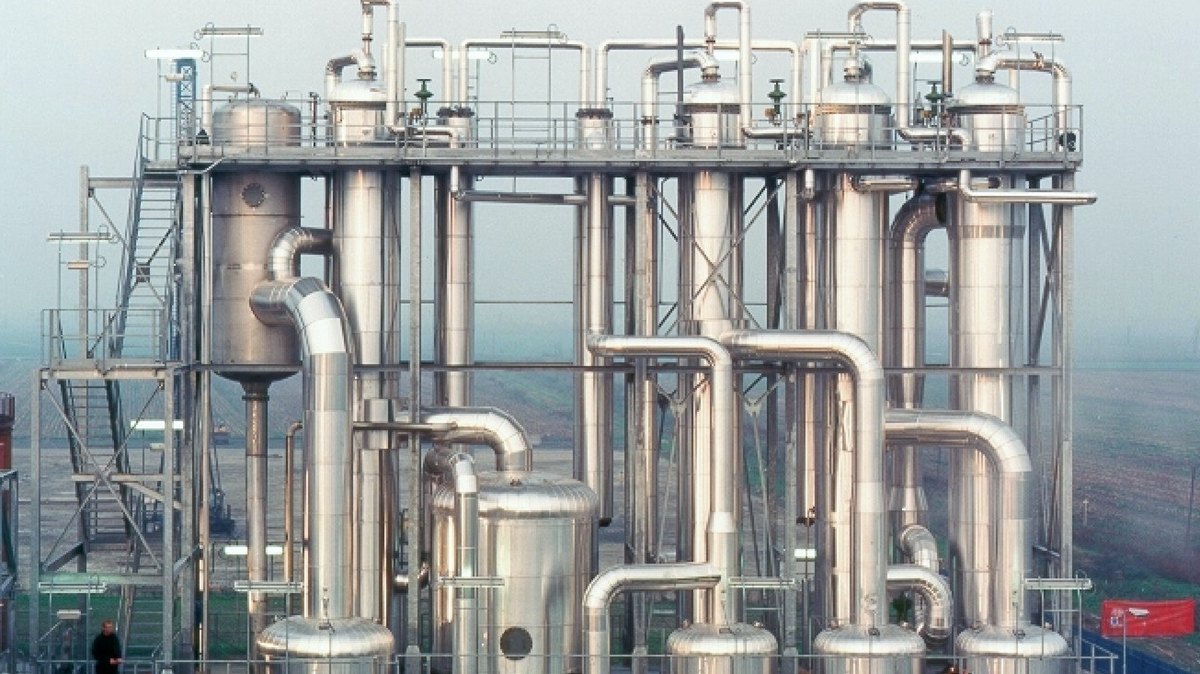
Since Distington Engineers and Consultants are a reputable Multi-Effect Evaporator Manufacturer, one can approach them regarding the entire turnkey MEE solutions, including process design and thermal calculations, all the way up to fabrication, installation, and commissioning. Their evaporators are designed with high evaporation rates, stable operation, and high service life in harsh industrial conditions.
Distington provides tailored MEE systems, depending on feeds, evaporation loads, availability of steam, and optimization of power needs.
Why Choose Distington Engineers & Consultants?
Distington Engineers & Consultants is popular in offering efficient and reliable evaporation systems

Designing of MEEs for different industrial effluents.

High-tech thermal engineering to achieve optimum energy conservation.
Good materials and accuracy of manufacture.
Adherence to environmental and discharge laws.

Good after-sales and maintenance services.

Low-cost systems that have low lifecycle running costs.
Distington, being a major Multiple Effect Evaporator Manufacturer and system integrator, is the assurer of sustainable wastewater concentration and recovery systems of the present day industries.
The selection of an appropriate multiple effect evaporator would be crucial in the efficacious management of effluent, recovery of water, and legitimacy. Collaborate with Distington Engineers and Consultants to develop state-of-the-art, dependable, and future-proofed evaporation systems that will last as long as possible.
Frequently Asked Questions About Multi-Effect Evaporator
A Multiple Effect Evaporator (MEE) is an energy-efficient thermal system used to concentrate industrial wastewater by evaporating water through multiple stages called "effects." The vapor produced in one effect is reused to heat the next effect, reducing steam consumption and operating costs. MEE systems are widely used in Zero Liquid Discharge (ZLD) plants to recover water and minimize wastewater discharge.
A Multi Effect Evaporator (MEE) is used to reduce the volume of industrial wastewater by removing water through evaporation. It is commonly used in chemical, pharmaceutical, textile, food processing, and other manufacturing industries to recover reusable water, concentrate high-TDS effluents, reduce disposal costs, and support Zero Liquid Discharge (ZLD) systems.
The main difference between MEE (Multiple Effect Evaporator) and MVR (Mechanical Vapor Recompression) is the method of energy recovery. An MEE uses multiple evaporation stages to reuse steam, while an MVR system compresses the generated vapor using a mechanical compressor and reuses it as the heating source. MVR generally offers lower steam consumption and operating costs but requires higher electrical power and a greater initial investment.
The two main types of evaporators are Single Effect Evaporators (SEE) and Multiple Effect Evaporators (MEE). A Single Effect Evaporator uses fresh steam for one evaporation stage, while a Multiple Effect Evaporator reuses vapor from one stage to heat the next, making it much more energy-efficient and suitable for large-scale industrial wastewater treatment.
An MVR evaporator works on the principle of mechanical vapor recompression. The vapor generated during evaporation is compressed using a mechanical compressor, which increases its temperature and pressure. This compressed vapor is then reused as the heating medium for further evaporation, significantly reducing the need for fresh steam and improving energy efficiency.
In an MVR system, the vapor produced during evaporation is collected and compressed by a mechanical compressor. The compressed vapor gains higher temperature and pressure, allowing it to be reused as the heating source for the evaporator. This continuous recycling of vapor minimizes steam consumption, lowers operating costs, and makes MVR technology highly energy-efficient for industrial wastewater treatment.
MVR (Mechanical Vapor Recompression) technology in an Effluent Treatment Plant (ETP) is used to treat high-TDS industrial wastewater by recycling the generated vapor as a heat source. This process reduces steam usage, lowers energy consumption, and helps industries recover reusable water while supporting Zero Liquid Discharge (ZLD) objectives. It is widely used in chemical, pharmaceutical, textile, and food processing industries.
The main difference between TVR (Thermal Vapor Recompression) and MVR (Mechanical Vapor Recompression) is the method of vapor compression. TVR uses a steam ejector and high-pressure steam to compress vapor, whereas MVR uses a mechanical compressor or blower. MVR generally provides higher energy efficiency and lower operating costs, while TVR is suitable for plants where high-pressure steam is readily available.
MVR (Mechanical Vapor Recompression) and TVR (Thermal Vapor Recompression) are energy-saving technologies used in evaporator systems. Both technologies recover and reuse vapor generated during evaporation to reduce steam consumption. MVR uses a mechanical compressor, while TVR uses a steam ejector. These technologies improve the efficiency of Multi Effect Evaporator (MEE) systems and help reduce operating costs in industrial wastewater treatment.
MVR stands for Mechanical Vapor Recompression. It is an advanced evaporation technology that compresses and reuses generated vapor as a heating source, reducing steam consumption and improving the energy efficiency of wastewater treatment and Zero Liquid Discharge (ZLD) systems.
Let's Connect for Your Multiple Effect Evaporator
Need a Customized Multi-Effect Evaporator for Your Industry?
Talk to our engineers for tailored MEE solutions designed to meet your wastewater treatment requirements, regulatory standards, and production needs anywhere in India.