
Zero Liquid Discharge (ZLD) Plant
- Home
- »
- Turnkey Projects
- »
- Zero Liquid Discharge Plant

Zero Liquid Discharge (ZLD) Plant Manufacturer in India
CPCB defines ZLD as systems that enable complete recycling of Industrial Effluent Treatment Plant, ensuring no liquid waste (effluent) is discharged into water bodies or land. The remaining residues must be concentrated and converted into solid form.
Zero Liquid Discharge is a comprehensive solution enabling industries to recycle more than 90% of their waste water for their process and civil water needs.
Since 2015,CPCB has mandated ZLD for specific high-polluting sectors and in general, for any industry operating in water-stressed regions or critical pollution zones, ZLD is now compulsory—no untreated or treated effluents may be discharged out of the industry premises. ZLD implementation aligns with broad guidelines under ESG, sustainability, NSG and reuse.
At Distington Engineers we custom design ZLD solutions for industries keeping in mind industry specific waste water parameters, current regional requirements mandated by PCB, reusability of treated water, operating and capital cost affordability.
What Is a Zero Liquid Discharge Plant?
The shortage of water and environmental laws have ensured that management of wastewater has become one of the most important issues for industries today. A Zero Liquid Discharge Plant (ZLD Plant) is a new-fangled treatment system aimed at making sure that no liquid waste can be discharged from the plant.
Rather, Wastewater is recycled, reused, and treated whilst solid residues are disposed of safely. Distington Engineers and Consultants, being one of the top Zero Liquid Discharge plant manufacturers in Indore, provides sustainable and efficient ZLD products to industrial and commercial use.
An effective ZLD plant will assist industries in being in regulatory compliance, water conservation, and impact mitigation.
Why Choose Distington Engineers for Zero Liquid Discharge Solutions?
- Upflow Anaerobic Sludge Blanket
- Strong post sales support from O&M to AMC, Jet Cleaning Services, Breakdown Support, Spares and Repairs
- Membrane Bio Reactor (MBR)
- Fixed Film Activated Sludge Reactor (FFAR)
- 15+ years of experience in ZLD technology
- Integrated fixed-film activated sludge and more (IFAS)
Types of Zero Liquid Discharge (ZLD) Systems
- 1. Decentralized (Segregated) vs Single treatment modules for different water streams depending on pollutants
-
2. Treatment Principles customized to industry requirement
2.1 ETP-UF-RO-MEE-ATFDScheme
2.2 ETP-MEE-ATFD Scheme
2.3. ETP-RO-ATFD Scheme
2.4 ETP-Single Effect MEE-ATFD 2.5 ETP-MVR-ATFD 2.6 Only ATFD 2.7 Crystalize based scheme
Trusted by Industries Across India

160 KLD Oil Refinery ZLD (MEE + ATFD)
Zero Liquid Discharge (ZLD) – MEE & ATFD
Our ZLD systems are engineered to achieve maximum water recovery with minimal to zero discharge
Multi Effect Evaporator (MEE):
- Multiple evaporation stages for energy efficiency
- Handles high TDS & complex effluents
Agitated Thin Film Dryer (ATFD):
- Recovers salts and solids from concentrated slurry
- Ensures compliance with stringent environmental norms
Benefits:
- High water recovery rates
- Reduced environmental footprint
- Robust, long-term performance

How Does a Zero Liquid Discharge Plant Work?
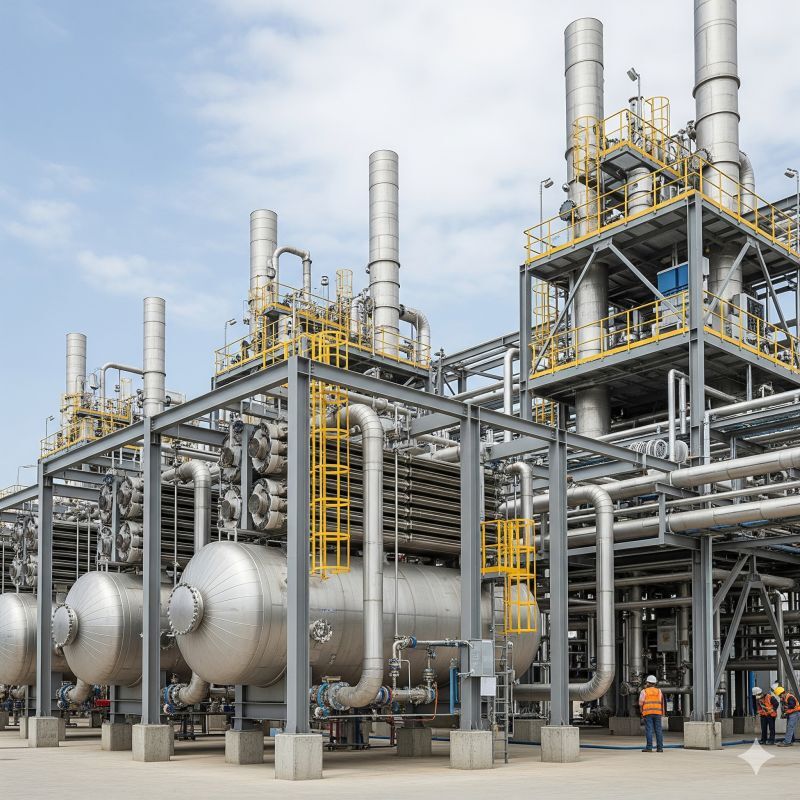
Zero Liquid Discharge plant uses a mix of physical, chemical, biological, and thermal treatment in order to recover as much water as possible, and to get rid of the liquid waste.
It normally starts with pre-treatment, which removes suspended solids, oil, and grease by the use of screens, clarifiers, and filtration units. The water is then treated and fed to membrane systems like RO and ultrafiltration, where clean permeate is collected to be recycled.
The concentrated reject stream is then processed in evaporators and crystallizers, whereby water is extracted as condensate and solid crystallized to be discarded. Recycled water is put back into the process, and dry salts or sludge is safely disposed of. This is an integrated method whereby liquid effluent is not discharged into the plant.
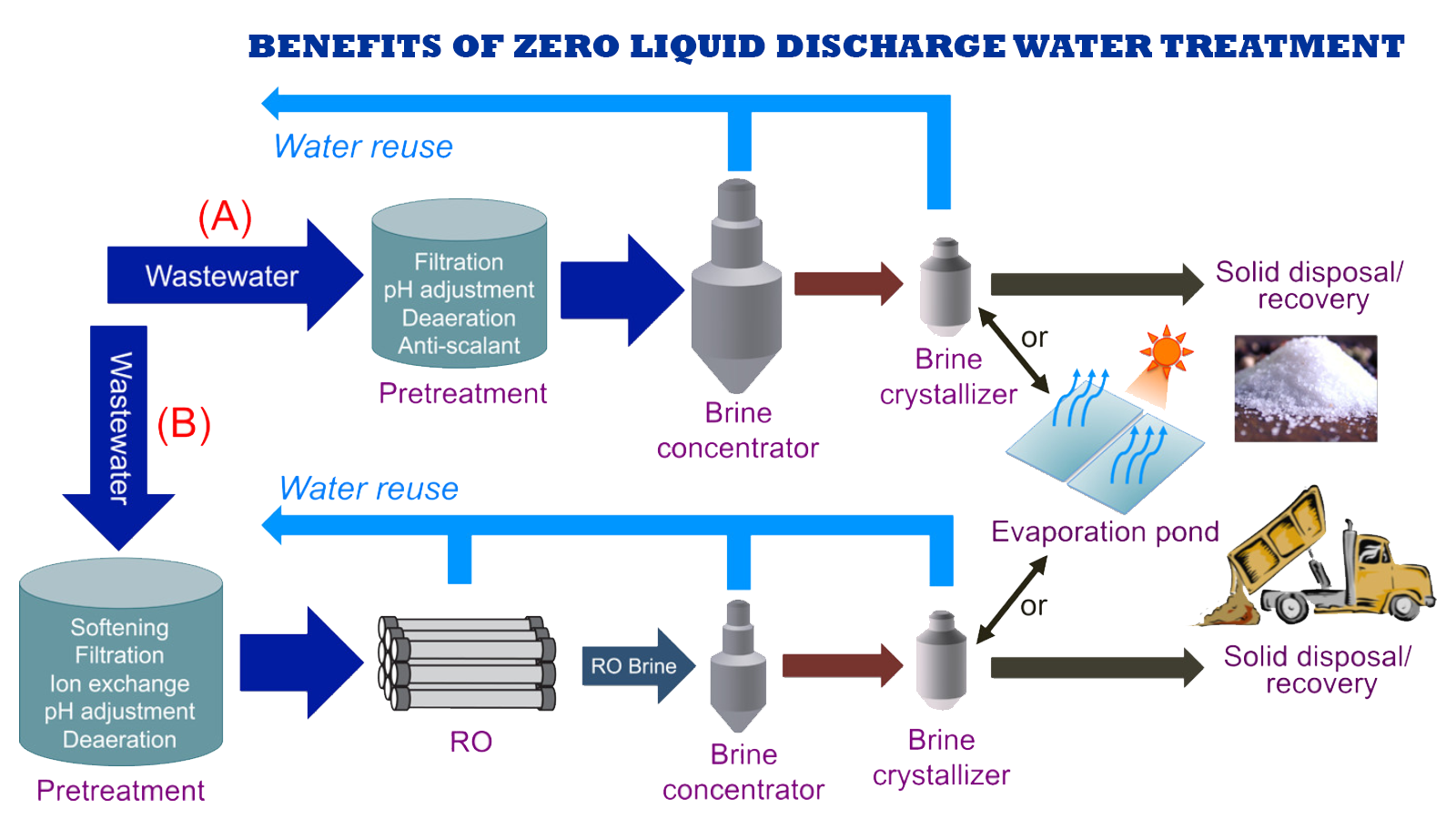
Benefits of Zero Liquid Discharge (ZLD) Systems
Zero Liquid Discharge Systems have a number of operational and environmental benefits:
- Full reduction of wastewater release.
- Maximum treatment and reuse of treated water.
- Less reliance on water resources.
- Adherence to strict environmental rules.
- Reduced chances of punishment and lawsuits.
- Value recovery of salts and by-products.
- Cost saving and long-term sustainability.
All these advantages render ZLD plants the right investment to water intensive industries.
Why Zero Liquid Discharge Is Essential for Industries
The lack of liquid discharge is necessary in areas that have water shortages and high pollution control standards. It ensures rivers, lakes, and groundwater are not polluted, and that industrial development becomes responsible. ZLD systems aid industries in complying with the CPCB and State Pollution Control Board standards to safeguard human health and enhance sustainable water management measures.
ZLD has in other industries like textiles, chemicals, and pharmaceuticals, become a regulatory model and not an option, and thus an advanced treatment system is essential.
Applications of Zero Liquid Discharge Plants
Zero liquid discharge plants find application in:
- Dyeing and textile factories.
- Drugs and chemical production.
- Thermal stations and power plants.
- Distilleries and fermenting plants.
- Pulp and paper industries
- Metal finishing and electroplating departments.
- Industrial parks and special economic areas.
Such uses demand a water recovery that is very efficient and a very rigid regulation of effluent disposal.
Leading Zero Liquid Discharge (ZLD) Plant Manufacturer in India
Being a reliable ZLD Plant Manufacturer and Zero Liquid Discharge Plant Supplier in Indore, Distington Engineers and Consultants provide a full turnkey ZLD solution, both in process design and technology choice and in the fabrication and installation, commissioning, and maintenance of the plant. Their plants are designed to accommodate the complicated effluent nature and provide stability in the water recovery and performance.
Distington designs ZLD systems depending on the industry type, effluent volume, salt mixture, and energy efficiency needs.
Why Distington Engineers is a Trusted ZLD Partner
With engineering excellence and sustainable engineering, Distington Engineers and Consultants are said to have:

ZLD technology to consider for diverse applications.
RO+MEE+Crystallizer + HitechFiltration requirement

Good materials and corrosion-free construction.

Compliance with the environmental rules and discharges.
fast project execution and good after-sales service.
Cost-effective systems for both energy and water.
Distington, as one of the leading ZLD Plant Manufacturers and solution providers ensure efficient, compliance to meet future requirement water treatment systems.
The selection of an appropriate zero liquid discharge plant prevents degradation of water resources and regulations, and facilitates clean industrial activities. Collaborate with Distington Engineers and Consultants in regard to the sophisticated, consistent, and high-performance ZLD solutions that are geared towards long term environmental responsibility.
Frequently Asked Zero Liquid Discharge Plant
Zero Liquid Discharge (ZLD) is an advanced wastewater treatment process that ensures no liquid waste is released into the environment. The system treats industrial wastewater using technologies such as Effluent Treatment Plants (ETP), Reverse Osmosis (RO), Multiple Effect Evaporators (MEE), and Agitated Thin Film Dryers (ATFD) to recover reusable water and convert the remaining dissolved solids into dry waste. ZLD helps industries conserve water, reduce environmental pollution, and comply with strict environmental regulations.
The difference between ZLD (Zero Liquid Discharge) and MLD (Million Litres per Day) is that they represent completely different concepts. ZLD is a wastewater treatment process that recovers water and eliminates liquid discharge, while MLD is a unit used to measure the capacity of a water or wastewater treatment plant. For example, a treatment plant may have a capacity of 5 MLD while operating as a Zero Liquid Discharge (ZLD) system.
An Effluent Treatment Plant (ETP) treats industrial wastewater to remove contaminants before discharging or reusing the treated water. In contrast, a Zero Liquid Discharge (ZLD) system goes a step further by recovering almost all the water and converting the remaining waste into dry solids, ensuring that no liquid effluent is discharged. ZLD systems often include an ETP along with advanced technologies such as RO, MEE, and ATFD.
The Zero Liquid Discharge (ZLD) standard requires industries to recover and reuse treated wastewater so that no untreated or treated liquid effluent is discharged outside the facility. The exact requirements vary by country and industry, but ZLD systems are designed to maximize water recovery, minimize waste, and comply with environmental regulations related to industrial wastewater management.
Zero Liquid Discharge (ZLD) is important because it helps industries reduce freshwater consumption, prevent water pollution, recover valuable resources, and comply with environmental regulations. It also supports sustainable manufacturing by recycling treated wastewater and minimizing the environmental impact of industrial operations.
Zero Liquid Discharge (ZLD) plants are widely used in industries that generate high volumes of wastewater, including textile, chemical, pharmaceutical, food processing, power generation, fertilizer, mining, metal finishing, and oil & gas. These industries use ZLD systems to recover water, reduce waste disposal costs, and meet strict environmental compliance requirements.
A Zero Liquid Discharge (ZLD) plant treats wastewater through multiple stages, including pre-treatment, filtration, reverse osmosis (RO), evaporation using a Multiple Effect Evaporator (MEE), and final drying with an Agitated Thin Film Dryer (ATFD). The recovered water is reused in industrial processes, while the remaining dissolved solids are converted into dry waste for safe disposal or recovery.
A Zero Liquid Discharge (ZLD) system offers several benefits, including maximum water recovery, reduced freshwater consumption, lower wastewater disposal costs, environmental compliance, resource recovery, and improved sustainability. It also helps industries minimize their environmental footprint while supporting long-term water conservation.
A Zero Liquid Discharge (ZLD) plant typically combines several treatment technologies, including Effluent Treatment Plants (ETP), Ultrafiltration (UF), Reverse Osmosis (RO), Multiple Effect Evaporators (MEE), Mechanical Vapor Recompression (MVR), and Agitated Thin Film Dryers (ATFD). These technologies work together to recover water and eliminate liquid waste discharge.
Yes, water recovered from a Zero Liquid Discharge (ZLD) plant can be reused in various industrial applications, such as cooling towers, boiler feed systems (after appropriate treatment), process water, equipment cleaning, and utility operations. Reusing treated water helps industries reduce freshwater demand and improve operational efficiency.
Let's Connect for Your Zero Liquid Discharge
Need a Customized Zero Liquid Discharge for Your Industry?
Talk to our engineers for tailored ZLD solutions designed to meet your wastewater treatment requirements, regulatory standards, and production needs anywhere in India.