
Sewage Treatment Facility: How Sewage Processing and Water Recycling Work
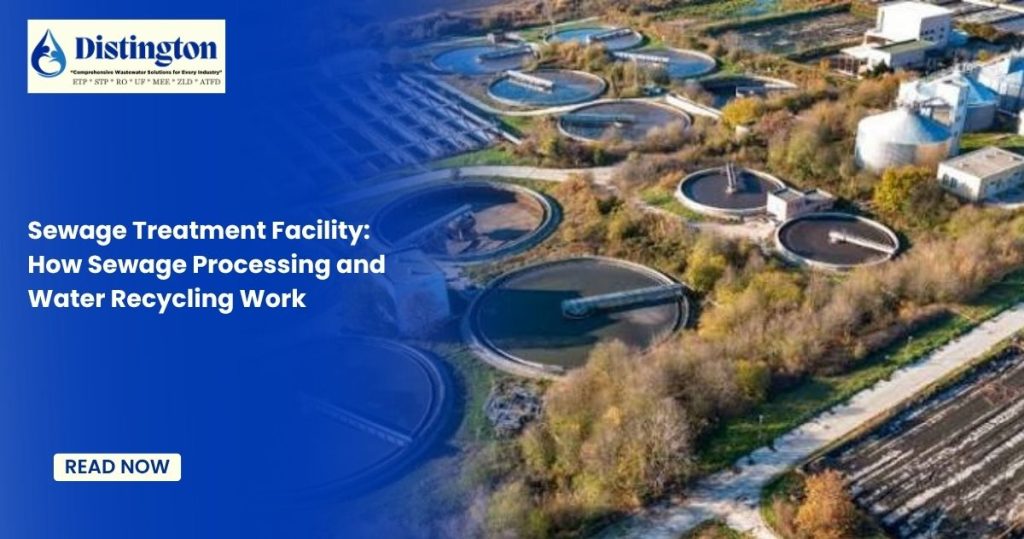
Managing sewage is no longer limited to treating wastewater before disposal. With increasing pressure on water resources and stricter wastewater management requirements, businesses and institutions are also looking at ways to recover and reuse treated water. A well-planned sewage treatment facility can support both responsible wastewater management and water conservation. What Is a Sewage Treatment Facility? A sewage treatment facility is an engineered system designed to manage wastewater generated from residential, commercial, institutional, and other facilities. Its purpose is to reduce pollutants from sewage and produce treated water suitable for the intended discharge or reuse requirement. The size and configuration of a facility can vary considerably. A hotel, residential development, hospital, educational campus, and large township may have very different sewage generation patterns and treatment requirements. This is why sewage management needs to be planned around actual wastewater flow, site conditions, treated-water requirements, and future capacity. Planning a new sewage treatment project? Discuss your STP requirement with Distington Engineers Why Is Sewage Processing Important? Sewage processing helps manage wastewater in a controlled manner instead of allowing untreated sewage to become an environmental or operational concern. Proper treatment can reduce the pollutant load and help organizations meet applicable wastewater management requirements. For commercial and institutional facilities, effective sewage management can also become part of a broader water-management strategy. Instead of treating wastewater only as something that needs to be disposed of, organizations can evaluate whether a portion of the treated water can be recovered for suitable non-potable applications. The approach depends on the quality of incoming sewage, required treated-water standards, available infrastructure, and the intended reuse application. Sewage Treatment vs Sewage Recycling Sewage treatment and sewage recycling are connected, but they serve different objectives. Sewage treatment primarily focuses on reducing contaminants in wastewater and achieving the required treated-water quality for its intended destination. Sewage recycling focuses on taking treated wastewater and making it suitable for selected reuse applications. Depending on the required water quality, additional treatment may be incorporated before reuse. This distinction is important when planning a project because a system designed only for discharge may not provide the water quality required for a particular reuse application. Interested in reducing freshwater demand through treated-water reuse? Explore Distington’s sewage treatment solutions How Does a Sewage Recycling Plant Support Water Reuse? A sewage recycling plant is designed with water recovery in mind. After the required Sewage Treatment, additional treatment stages may be considered depending on where the recovered water will be used. For example, recycled water may be considered for: Toilet and urinal flushing Gardening and landscaping Green-area maintenance Certain utility applications Other approved non-potable uses The final application should always be matched with the required water quality and applicable standards. Water intended for reuse therefore needs to be evaluated differently from water intended only for disposal. What Should Be Considered Before Planning a Recycling System? Before selecting a sewage recycling plant, several practical factors should be evaluated: Sewage quantity: Average and peak wastewater flow affect system sizing. Wastewater characteristics: The incoming sewage determines the treatment requirements. Reuse objective: The intended application determines the required treated-water quality. Available space: The site may influence equipment selection and system configuration. Future expansion: Expected changes in occupancy or production should be considered. Operation and maintenance: The system should be practical to operate and maintain over its service life. Considering these factors at the planning stage can help avoid selecting a system based only on capacity or initial installation cost. When Does Sewage Recycling Make Sense? Sewage recycling can be considered where a facility has a consistent sewage stream and a practical demand for treated water. Hotels, residential developments, educational campuses, commercial buildings, hospitals, and other large establishments may evaluate water reuse as part of their overall wastewater strategy. The feasibility depends on the site’s water consumption, sewage generation, reuse requirements, available space, and the quality of water required for the proposed application. Have a specific sewage flow or water-reuse requirement? Speak with Distington Engineers to discuss the treatment and recycling requirements of your project. Planning a Sewage Treatment and Recycling Project A successful sewage management project starts with understanding the wastewater rather than selecting equipment first. Flow assessment, wastewater characteristics, reuse objectives, space availability, operating requirements, and future needs should all be considered during planning. For organizations looking beyond basic wastewater disposal, combining appropriate sewage processing with water recycling can provide a more complete approach to wastewater management. Distington Engineers provides sewage treatment solutions based on project requirements, including system planning, technology selection, installation, commissioning, and post-installation support.