Effluent Treatment Plant (ETP)

  1. Home
  2. »
  3. Turnkey Projects
  4. »
  5. Effluent Treatment Plant
Effluent Treatment Plant Manufacturer by Distington Engineers & Consultant Pvt. Ltd.

Effluent Treatment Plant (ETP) Manufacturer in India

With over 30 years of experience, Distington Engineers & Consultant Pvt. Ltd. provides industrial and commercial Effluent Treatment Plant (ETP) solutions covering design, fabrication, erection, installation, commissioning and post-sales support.

Our ETP plants are designed around the specific characteristics of industrial effluent, including contaminant type, flow variation, pollutant load, available space and water-reuse requirements. This allows the treatment system to be configured according to the industry’s actual wastewater conditions rather than using a one-size-fits-all approach.

From prefabricated and compact ETP systems for space-constrained applications to large-capacity industrial installations, Distington offers manually operated as well as SCADA-based automated treatment systems.

Our support also extends beyond installation, with O&M, AMC, breakdown assistance, spare parts and maintenance services for long-term plant operation.

What Is an Effluent Treatment Plant?

An Effluent Treatment Plant (ETP) is a wastewater treatment system designed to treat industrial effluent before it is discharged, reused or sent for further treatment.

Industrial wastewater can contain a combination of organic matter, suspended solids, oils and grease, chemicals, dissolved contaminants and, depending on the industry, heavy metals and other pollutants. The treatment process therefore needs to be selected according to the source and characteristics of the effluent.

A properly designed ETP helps industries reduce the pollutant load in wastewater, support compliance with applicable discharge requirements and recover water for suitable non-potable applications.

As an experienced ETP plant manufacturer in India, Distington develops treatment solutions based on the industry’s wastewater characteristics, required treatment quality, plant capacity and intended end use of treated water.

Why Is an Industrial Effluent Treatment Plant Important?

Industrial wastewater varies significantly from one manufacturing process to another. A treatment system that works for food-processing wastewater, for example, may not be appropriate for chemical, pharmaceutical, textile or metal-processing effluent.

An industrial ETP helps address these variations through a combination of physical, chemical and biological treatment processes.

Depending on the application, an ETP can help industries:

  • Reduce suspended solids, organic pollutants and other contaminants
  • Treat industry-specific wastewater before discharge
  • Improve the quality of treated water for approved reuse applications
  • Reduce freshwater consumption through water recovery and reuse
  • Support compliance with applicable environmental and discharge requirements
  • Integrate with advanced treatment or Zero Liquid Discharge (ZLD) systems where required

Why Choose Distington Engineers for Your Industrial Effluent Treatment Plant (ETP) Needs?

How Does an Effluent Treatment Plant Work?

An ETP generally uses a combination of physical, chemical and biological treatment stages. The exact configuration depends on the Wastewater characteristics, flow rate, pollutant load and required treated-water quality.

1

Preliminary Treatment

The first stage removes larger solids and floating contaminants that could interfere with downstream treatment equipment. Screens, oil and grease removal systems, equalization tanks and related equipment may be used to control solids, floating matter and variations in wastewater flow. Equalization also helps provide a more consistent feed to subsequent treatment stages.
2

Secondary Biological Treatment

Where the wastewater contains biodegradable organic matter, biological treatment can be used to reduce the organic load. Biological systems use microorganisms under controlled operating conditions to treat dissolved organic pollutants. Technologies such as SBR, MBBR, MBR, Extended Aeration and other biological configurations may be selected depending on the application.
3

Tertiary and Advanced Treatment

Additional treatment may be required when the treated water needs to meet a higher quality standard for discharge or reuse. Depending on the project, tertiary treatment can include filtration, activated carbon, membrane-based processes or other polishing technologies to address remaining contaminants. For water-intensive industries, the ETP can also be integrated with further treatment systems such as RO, MEE, ATFD and ZLD, where technically and commercially appropriate.

Advanced Effluent Treatment Technologies

Distington provides ETP solutions using different treatment technologies according to wastewater characteristics and project requirements.

Sequential Batch Reactor (SBR)

SBR is a batch biological treatment process in which different treatment stages are carried out within a controlled reactor cycle. It can be suitable where process flexibility and controlled biological treatment are required.

Moving Bed Biofilm Reactor (MBBR)

MBBR uses attached microbial growth on carrier media to support biological treatment. It can provide a compact treatment configuration and can be considered where space and treatment capacity are important factors.

Membrane Bioreactor (MBR)

MBR combines biological treatment with membrane separation to produce a higher-quality treated-water stream. It can be considered for applications where treated-water quality and reuse are important.

Extended Aeration (EA)

Extended aeration provides prolonged biological treatment and can be used for wastewater streams where biological reduction of organic pollutants is required.

Trusted by Industries Across India

Effluent Treatment Plants (ETP)

Our ETPs are tailor-made for your specific industrial needs removing contaminants such as chemicals, heavy metals
and organic matter

Applications:

  •  Chemical & Pharma
  •  Food & Beverages
  •  Textile & Dyeing
  •  Automobile
  •  Dairy
  •  Steel & Metal
  •  Pulp & Paper

Flow Range: 1 KLD to 1500 KLD

Technology Options:

  • SBR (Sequencing Batch Reactor)
  • MBBR (Moving Bed Biofilm Reactor)
  • EA (Extended Aeration)
  • MBR (Membrane Bioreactor)
  • Three phase reactor

Key Features:

  • ·CPCB-approved technology
  • Low O&M cost and easy upgradability
  • Compact design with minimal footprint
  • 24/7 service support
  • High treatment efficiency for reuse or safe
    discharge
Untitled design 42

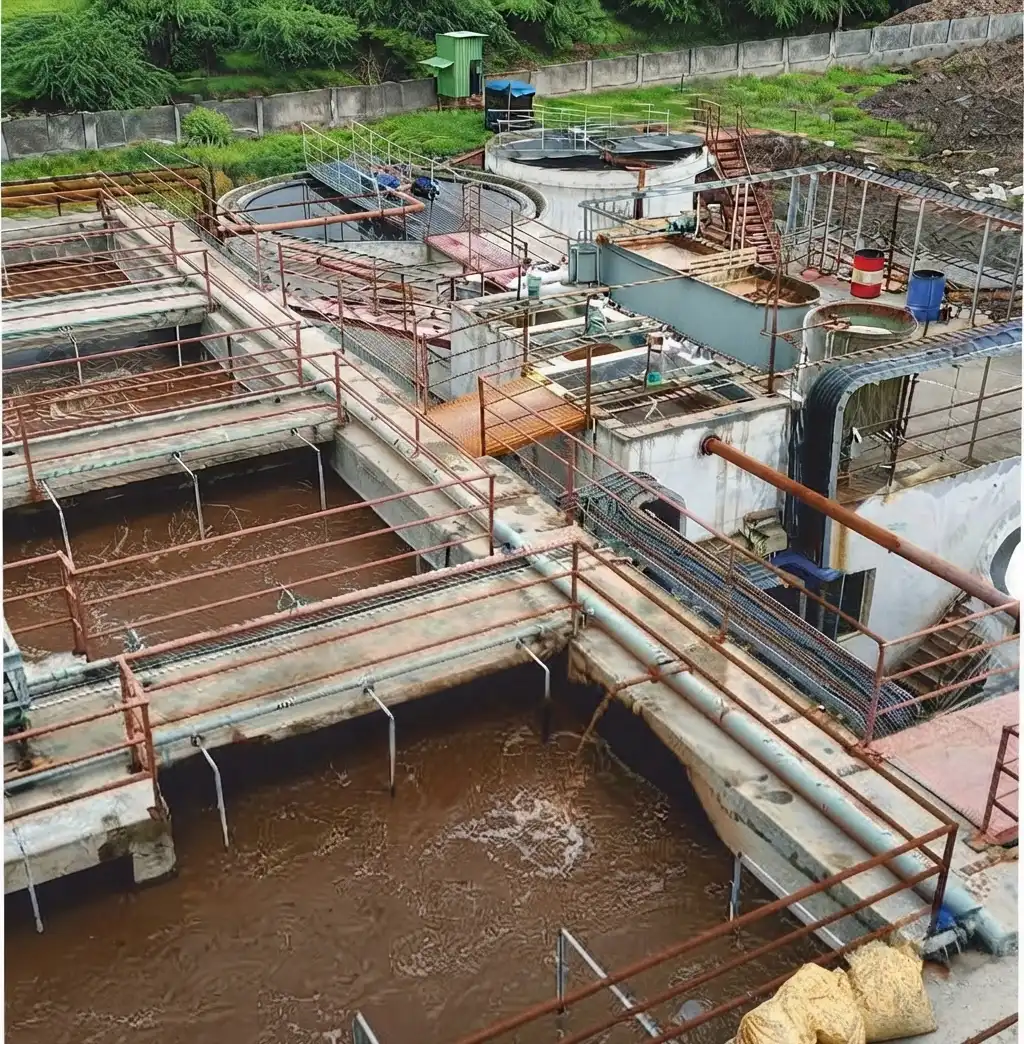
400 KLD ETP, MP.

Key Features of Effluent Treatment Plants

Modern ETP systems need to balance treatment performance, operating requirements, available space and long-term maintenance.

Key features of Distington’s ETP solutions include:

  • Treatment of organic and inorganic pollutants based on wastewater characteristics
  • Compact and space-efficient configurations
  • Energy-conscious aeration and pumping systems
  • Automated process monitoring and controls where required
  • Options for modular expansion and future capacity requirements
  • Designed for manageable operation and maintenance
  • Appropriate materials selected according to the wastewater environment
  • Support for treated-water reuse where the application permits
  • Post-installation O&M, AMC, breakdown and spare-parts support

Distington combines established treatment technologies with practical process engineering to develop ETP systems around the actual wastewater generated by each industry. The treatment arrangement is selected after considering the effluent characteristics, flow, pollutant load, available space and the quality required after treatment.

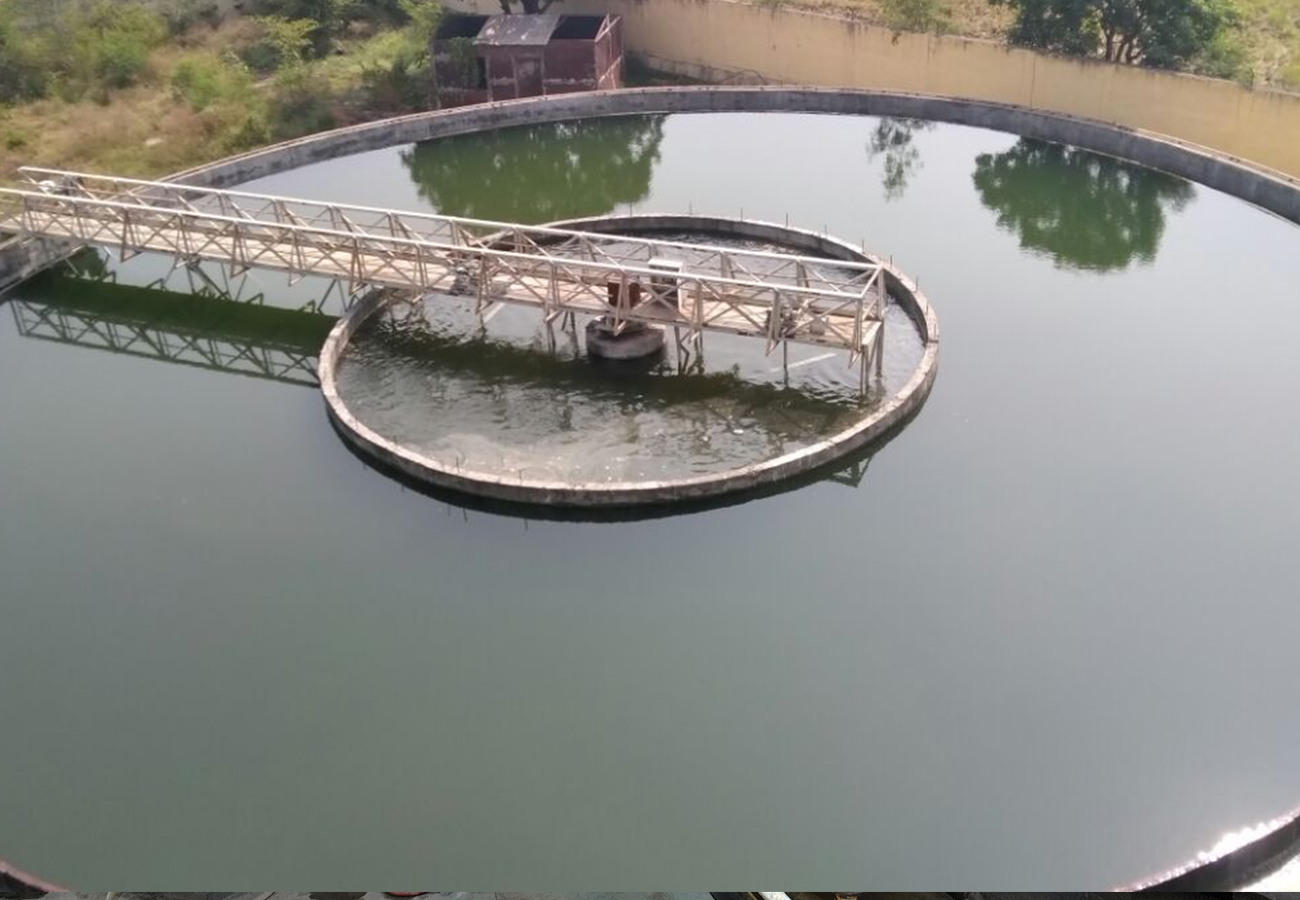
Large circular secondary clarifier tank with a central bridge and scraper mechanism for wastewater treatment by Distingon Engineers & Consultant Pvt. Ltd.
Applications of industrial effluent treatment plants and piping network by Distington Engineers

Applications of Industrial Effluent Treatment Plants

Industrial ETPs are used wherever manufacturing or processing activities generate wastewater that requires treatment before discharge or reuse.

Common applications include:

  • Treating wastewater generated during industrial manufacturing and processing
  • Removing suspended solids, organic matter, oil, chemicals and other industry-specific pollutants
  • Preparing treated water for suitable reuse within the plant
  • Supplying treated water for applications such as cooling, washing and other non-potable uses
  • Providing treated effluent as feed for RO and other membrane-based systems
  • Supporting ZLD systems where higher water recovery is required
  • Reducing dependence on fresh water by recovering and reusing treated wastewater

The treatment and reuse route should be selected according to the quality of the incoming effluent and the requirements of the process where the treated water will be used.

ETP Plant Manufacturer and Supplier in India

Distington Engineers undertakes the complete execution of Effluent Treatment Plant projects, from initial process planning through installation and commissioning.

Depending on the project scope, our services include:

  • Assessment of industrial wastewater characteristics
  • Selection of suitable ETP treatment processes
  • Process and system design
  • Equipment engineering and fabrication
  • ETP installation and erection
  • Plant commissioning
  • Automation and SCADA integration
  • O&M and AMC services
  • Breakdown support
  • Spare parts and maintenance assistance

As an Effluent Treatment Plant manufacturer and supplier in India, Distington focuses on developing a treatment system that fits the client’s wastewater, operating conditions and discharge or reuse requirements.

Why Choose Distington Engineers Consultants?

Selecting an ETP manufacturer involves more than choosing equipment. Process design, equipment selection, installation and support all have a direct impact on how the plant performs after commissioning.

Gemini Generated Image 6n8hr56n8hr56n8h removebg preview e1769493550148

ETP Design Based on Actual Wastewater

Distington considers the characteristics of the incoming effluent before finalizing the treatment configuration. Factors such as flow, pollutant load, treatment targets and available space are considered during the design stage.

Gemini Generated Image mll691mll691mll6 removebg preview e1769493507499

Multiple Treatment Technology Options

Depending on the wastewater, the treatment scheme may combine physical, chemical, biological or advanced treatment processes. This allows the plant configuration to be adapted to the requirements of different industries.

Gemini Generated Image 2znte12znte12znt removebg preview e1769493576486

Complete Project Execution

Distington's project scope can cover process design, engineering, equipment fabrication, erection, installation and commissioning, providing clients with a coordinated approach to ETP implementation.

Gemini Generated Image lduokxlduokxlduo removebg preview e1769493400268

Automation and SCADA Options

Where automation is required, instrumentation and SCADA-based monitoring can be incorporated to help operators monitor plant parameters and manage treatment processes.

Gemini Generated Image 44749i44749i4474 removebg preview e1769493376312

Operation and Maintenance Support

Support does not end with commissioning. Distington provides O&M, AMC, breakdown assistance, spare parts, repairs and maintenance support for ongoing plant operation.
864560e2 81b5 4941 9702 9dd1e5494ca9

Distington, being one of the Effluent Treatment Plant Manufacturers and ETP Plant Manufacturers, guarantees the modern industries' sustainable wastewater management.

The selection of the proper effluent treatment facility safeguards the environment, ensures that the regulations are met, and conserves water. Contract with Distington Engineers and Consultants to get further, high-technology, and future-ready effluent treatment solutions.

Frequently Asked Questions About Effluent Treatment Plan

An Effluent Treatment Plant (ETP) is a system designed to treat industrial wastewater by removing harmful contaminants, chemicals, suspended solids, and pollutants before the water is safely discharged or reused. ETPs help industries comply with environmental regulations, protect natural water resources, and reduce the environmental impact of industrial operations.


An ETP plant works by treating industrial wastewater through multiple stages, including screening, equalization, chemical treatment, biological treatment, clarification, filtration, and sludge management. These processes remove suspended solids, organic matter, oils, chemicals, and other contaminants, ensuring the treated water meets environmental discharge standards or can be safely reused in industrial operations.


Industries that generate contaminated wastewater typically require an Effluent Treatment Plant (ETP). Common sectors include pharmaceuticals, chemicals, textiles, food and beverage processing, paper and pulp, electroplating, dyes, oil and gas, automotive, and metal processing. An ETP helps these industries treat wastewater, comply with environmental regulations, and minimize their impact on natural water resources.

The main difference is the type of wastewater they treat. An Effluent Treatment Plant (ETP) is designed to treat industrial wastewater containing chemicals, oils, and other contaminants. A Sewage Treatment Plant (STP) treats domestic wastewater from homes, offices, hotels, and commercial buildings. Both systems help produce treated water that meets environmental standards, but they are designed for different wastewater sources.

The cost of an Effluent Treatment Plant (ETP) in India depends on factors such as treatment capacity, wastewater characteristics, industry type, automation level, and project requirements. Small systems are generally more affordable, while large, customized plants require a higher investment. For an accurate estimate, it is best to request a site assessment and a customized quotation based on your specific needs.

Yes, we design and manufacture customized Effluent Treatment Plants (ETPs) to meet the specific wastewater treatment requirements of different industries. Our solutions are tailored based on wastewater characteristics, treatment capacity, available space, regulatory standards, and water reuse objectives to ensure efficient and reliable performance.

Yes, we provide installation and commissioning services for Effluent Treatment Plants (ETPs) across India. Our experienced team manages system installation, testing, performance checks, and operator training to ensure the plant operates efficiently and meets the required treatment standards.

Yes, we offer Annual Maintenance Contracts (AMC) and comprehensive maintenance support for Effluent Treatment Plants (ETPs). Our services include routine inspections, preventive maintenance, troubleshooting, spare parts support, and performance optimization to ensure reliable operation, reduced downtime, and long-term efficiency.


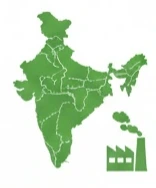
We provide industrial water and wastewater treatment solutions across India, serving clients with reliable installation, commissioning, and after-sales support.

Yes, treated wastewater can be safely reused for industrial processes, cooling, gardening, and other non-potable applications, helping conserve water and reduce operating costs.

Let's Connect for Your Effluent Treatment Plant

Need a Customized Effluent Treatment Plant for Your Industry?

Talk to our engineers for tailored ETP solutions designed to meet your wastewater treatment requirements, regulatory standards, and production needs anywhere in India.

      +9173878 88545

    Enquiry Form